

In June, we recommended breaking a fixed mortgage early for one of our clients and moving them onto a higher interest rate.. It sounds like an odd way to save money, but in this case the numbers made a fairly compelling argument.
It would have been easy to assume they were better off staying on their existing rate until it expired in September. Historically, that’s how mortgages have been managed. You fix for a term, leave it alone, and look at your options when that term comes to an end. But we are constantly looking at the bigger picture. In June, swap rates had been moving higher and our mortgage intelligence model was indicating that this was going to flow through to higher mortgage rates. Our client’s loan was due to roll over in September, which put them outside the bank’s 60-day rate-lock window.
We wanted to understand whether the savings from keeping their lower rate for a little longer would outweigh the potential additional cost of waiting until September. So, we modelled both scenarios. We compared the additional interest they would pay by breaking the loan early and moving onto a higher rate against the potential cost of waiting until September to refix. Based on the numbers, and the balance of probabilities, we knew breaking early was the better option. It meant paying a little more in interest in the short term, but gave the client the opportunity to secure the two-year rate available at the time, before the expected increase in bank pricing.
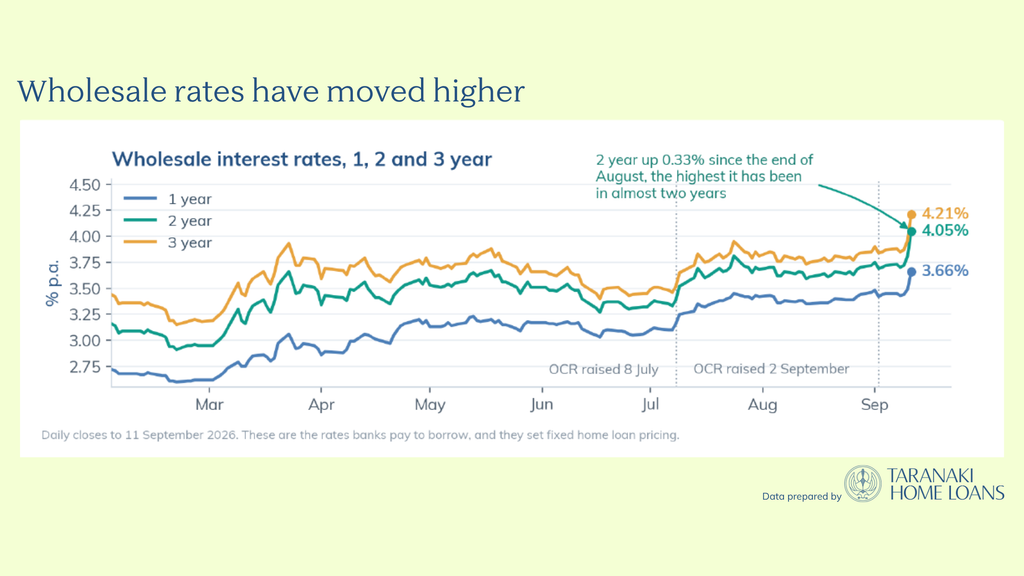
By the time their original fixed term rolled over in September, two-year rates had increased. The difference between the rate we secured in June and the rate available at rollover meant the client saved around $8,000 over the new fixed term.
It is important to note that we weren’t trying to predict exactly what mortgage rates would be in September. We make these decisions based on information that is already in the market. Fixed mortgage rates are influenced by wholesale interest rates, and those can move well before borrowers see the full effect in the rates being offered by banks. It means the best time to make a mortgage decision isn’t necessarily the day your fixed term expires. Sometimes there is value in acting earlier, which is why we monitor our clients’ mortgages between refixes rather than waiting for a fixed term to end.
The opportunity won’t always look the same. Sometimes it might mean breaking a fixed mortgage early, repricing with the existing bank, and sometimes it could mean changing the structure of the loan. The important part is knowing when the numbers have shifted enough to make it worth taking another look. In this case, paying a little more early saved our client around $8,000.
General commentary only. Talk to an advisor before making a mortgage decision.